Signs of a Bad Turbo: 10 Warning Signs You Should Never Ignore
Your Engine Usually Gives You a Warning
Turbochargers rarely become a concern because someone happens to inspect one on a workbench. Most owners first realize something is wrong because the engine starts behaving differently.
Maybe the truck does not pull as hard as it normally does. Maybe you hear a new whistle under acceleration. You may notice smoke, increased oil consumption, slower boost response or a check-engine light.
Those symptoms deserve attention, but they do not automatically mean you need a new turbocharger.
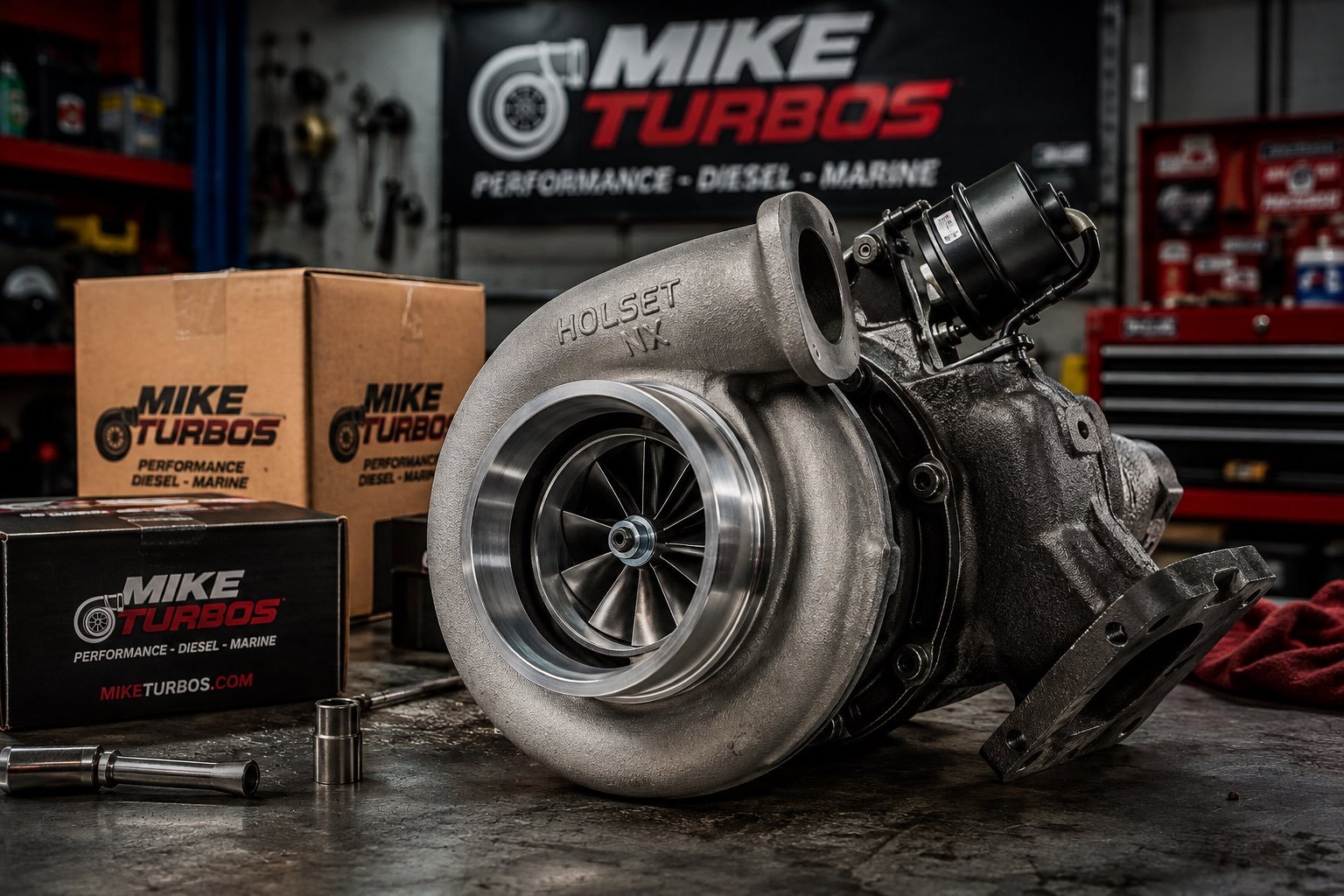
A turbo uses energy from the engine’s exhaust to spin a turbine. That turbine is connected by a shaft to the compressor wheel on the intake side, which compresses incoming air before it reaches the engine. Because the turbocharger works as part of the engine’s intake, exhaust and lubrication systems, a problem elsewhere can sometimes look exactly like a turbo failure.
The smartest approach is to recognize the warning signs early and diagnose the entire system before spending money.
- Loss of Power
One of the most common reasons an owner starts investigating the turbo system is a noticeable loss of power.
A heavy-duty truck may struggle more than usual on a grade. A diesel pickup may feel slower when accelerating. A performance car may no longer build power the way it did before.
A damaged compressor wheel can reduce the turbocharger’s ability to produce the expected airflow and boost pressure, resulting in poor engine performance.
But power loss can also come from other problems, including:
- Charge-air leaks
- Restricted air filters
- Exhaust problems
- Fuel-system faults
- Sensor problems
- Turbo-control issues
- Engine mechanical problems
That is why “loss of power” should begin the diagnostic process rather than end it.
- Lower-Than-Normal Boost
If your vehicle has a boost gauge or electronic boost reading, a consistent drop in boost pressure can be an important clue.
Possible causes include:
- Compressor-wheel damage
- Charge-pipe leaks
- Intercooler leaks
- Wastegate problems
- VGT vane problems
- Actuator faults
- Exhaust leaks before the turbine
- Exhaust restrictions
A professional inspection should determine whether the turbocharger is actually failing or simply unable to perform correctly because another part of the system is compromised.
- A New Whistle, Screech or Siren-Like Noise
Turbos make noise. That is normal.
The concern is when the sound changes.
If a turbo that normally has a smooth whistle suddenly becomes much louder, develops a screeching noise or begins producing a siren-like sound, something deserves attention.
Compressor-wheel damage can be associated with unusual whistling or screeching, vibration and reduced boost.
If the sound is accompanied by loss of power, smoke or oil consumption, avoid assuming it will disappear on its own.
- Smoke From the Exhaust
Smoke is one of the symptoms consumers most often associate with turbo failure.
Depending on the engine and failure, smoke may appear because oil is entering the intake or exhaust side of the system. A damaged rotating assembly can contribute to oil leakage, which may eventually produce visible exhaust smoke.
However, exhaust smoke can also result from fuel-system problems, worn engine components, emissions-system issues and other conditions.
The color, timing and operating conditions when the smoke appears can help with diagnosis.
Tell the technician whether the smoke appears:
- At startup
- During acceleration
- Under heavy load
- After idling
- Continuously
Those details matter.
- Increased Oil Consumption
If you suddenly need to add engine oil more frequently, investigate the reason.
Turbochargers depend on a continuous supply of clean oil for lubrication. Oil starvation and oil contamination are major causes of turbocharger damage.
But oil appearing near the turbo does not automatically prove that internal turbo components are defective.
Problems with oil drainage, crankcase pressure or the engine’s lubrication system can also contribute to apparent turbo oil leakage.
- Oil in the Turbo or Charge-Air Piping
Finding oil in the compressor housing or charge-air pipes understandably makes owners nervous.
The first reaction is often:
“My turbo seals are bad.”
Sometimes that is true.
Sometimes it is not.
Turbocharger oil leakage can be caused by external operating conditions in addition to internal damage.
That distinction is extremely important because replacing a good turbo will not solve a crankcase-pressure or oil-drainage problem.
- Check-Engine Light or Turbo-Related Fault Codes
Modern engines constantly monitor operating conditions.
A problem affecting boost pressure, actuator position, variable geometry, airflow or related systems may trigger diagnostic trouble codes.
Codes are valuable, but a code referring to boost or turbo operation does not always mean the complete turbocharger has failed.
For example, a variable-geometry turbo system may have an actuator or vane-control problem while the rotating assembly remains mechanically usable.
Proper diagnosis separates those issues before parts are ordered.
- Slow Turbo Response
You know your vehicle.
An owner-operator who drives the same truck every day knows how quickly it normally responds under load. A performance enthusiast knows approximately when the turbo begins building useful boost. A boat owner knows how the engines normally accelerate toward cruising RPM.
If spool response suddenly becomes noticeably slower, investigate.
Possible causes can include:
- Boost leaks
- Exhaust leaks
- VGT problems
- Wastegate problems
- Compressor damage
- Turbine damage
- Restricted airflow
- Engine-related issues
A gradual change is easy to get used to. Pay attention to how the engine behaves over time.
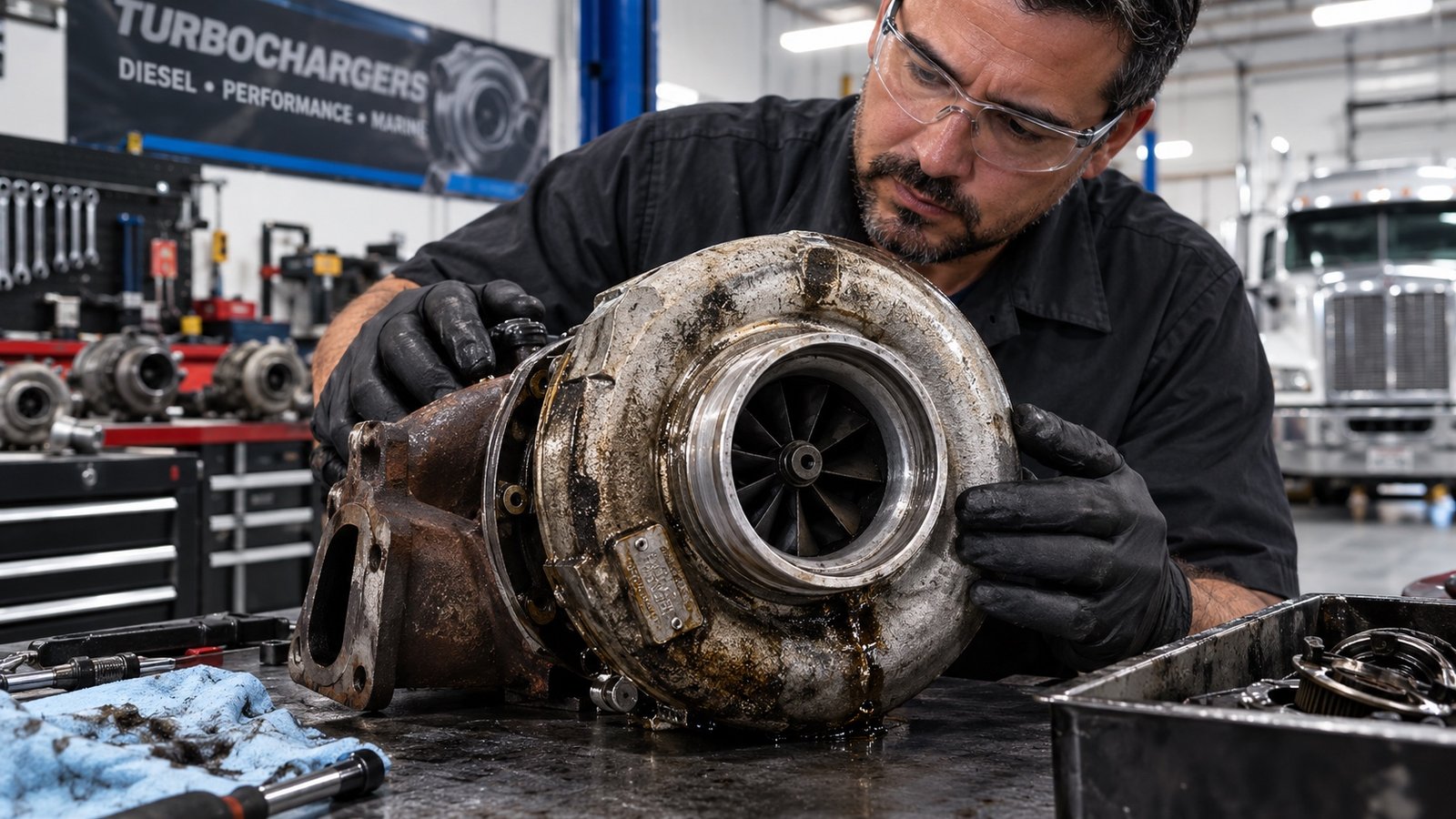
- Excessive Shaft Movement or Wheel Contact
Inside the turbocharger, the compressor and turbine rotate together on a shaft.
When wear becomes excessive, abnormal shaft movement can eventually allow rotating components to contact surrounding housings.
Severe shaft motion can contribute to metal-to-metal contact, increased noise, reduced performance, oil leakage and ultimately complete turbocharger failure.
Internal inspection should be performed correctly by someone familiar with turbocharger tolerances.
A turbocharger is not a component that should be casually disassembled at home.
- The Engine Simply Feels Different
This may sound less technical than the other warning signs, but it matters.
People who operate equipment regularly often detect changes before a dashboard warning becomes obvious.
Your truck may feel lazy.
The engine may sound different under load.
Boost may arrive differently.
Fuel consumption may change.
The boat may take longer to reach normal cruising speed.
A performance vehicle may stop pulling the way it used to.
Do not dismiss those observations.
They are often the reason a problem is caught early.
Does One of These Symptoms Mean Your Turbo Is Bad?
No.
That is one of the most important things to understand.
Low power, smoke, noise and oil consumption can also be caused by fuel, air, exhaust, lubrication and crankcase-related problems.
Mike Turbo’s own technical guidance similarly identifies maintenance, contaminated oil, clogged air filters, lubrication issues and exhaust-system conditions as factors that can contribute to turbo-related failures.
The objective is not simply to identify a symptom.
The objective is to identify why the symptom exists.
Repair, Rebuild or Replace?
Once the turbocharger has been inspected, there are generally several possibilities.
Repair
A specific issue may be serviceable without replacing the entire unit.
Rebuild
If the major hard components remain usable, the turbo may be a candidate for rebuilding.
Mike Turbo’s rebuild process includes complete disassembly, inspection of components, replacement of service items and balancing of rotating parts.
Replacement
If the damage is extensive or the economics favor a complete unit, replacement may be the better decision.
The correct solution depends on the actual turbocharger, application and condition.
Before You Buy a Turbo, Diagnose the Problem
A turbocharger is too expensive—and the engine it protects is too valuable—to rely on guesswork.
If you are experiencing low boost, smoke, unusual noise, oil consumption or reduced power, have the system diagnosed before purchasing a replacement.
Mike Turbo Inc specializes in turbocharger repair, rebuilding, balancing, upgrades and replacement solutions for diesel, heavy-duty, performance and marine applications.
The symptom tells you something is wrong. A proper diagnosis tells you what to do about it.